Little Life
Dollhouses and 19th-century domestic life
Little Life invites you to discover a fascinating miniature world that brings to life the domestic world of the bourgeoisie from the mid-19th to the early 20th century.
Cooking, setting the table, dusting, making beds, welcoming guests or tidying the house: these everyday activities were once recreated by children through their dolls, dollhouses, miniature stoves and tea sets. More than 100 years ago, this type of toy was mainly intended for girls from wealthy families. It also had an educational purpose, preparing them through play for their future role within the household.
Through six dollhouses, several miniature rooms and numerous pieces of miniature furniture and accessories dating from 1850 to 1920, the exhibition explores the evolution of the home, its interiors and the everyday life of a well-to-do family of the period.
The objects on display come from the toy collection of the European Ethnology Department of the Art & History Museum, complemented by loans from the Toy Museums of Brussels and Mechelen and the Musée de la Vie Wallonne in Liège.
A centrepiece: the Brussels dollhouse
At the heart of the exhibition stands an exceptional dollhouse, made around 1900 by Brussels engineer and electrician Jules Charlier. Created for his nieces, it is modelled on a neoclassical house built in Etterbeek in 1876.
Crafted with great care and remarkable attention to detail, this miniature house offers a valuable insight into Belgian bourgeois domestic life during the second half of the 19th century. It illustrates the layout and decoration of a typical middle-class townhouse of the period, from its reception rooms to its more private spaces.
From the drawing room to the bathroom: a miniature home brought to life
The exhibition is organised around several thematic spaces, inviting visitors to discover the different rooms of a bourgeois home and how they evolved throughout the 19th century.
The drawing room: welcoming guests
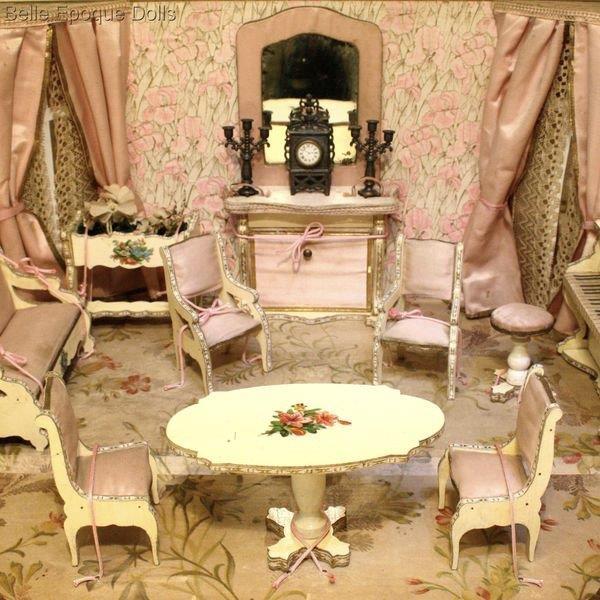
The drawing room was where guests were received and was the most luxurious room in a 19th-century bourgeois home. As a semi-public space, it reflected the family's social status. Drawing rooms also held a prominent place in dollhouses. Larger models sometimes featured several reception rooms, each with its own purpose: a grand drawing room, a music room or a smoking room.
The dining room: time for dinner!
During the 19th century, the dining room became increasingly important. Sharing meals around the table became a special family moment, strengthening family bonds. The wide variety of miniature dinner services and table accessories reflects the growing importance of dining culture.
The kitchen: cooking and cleaning
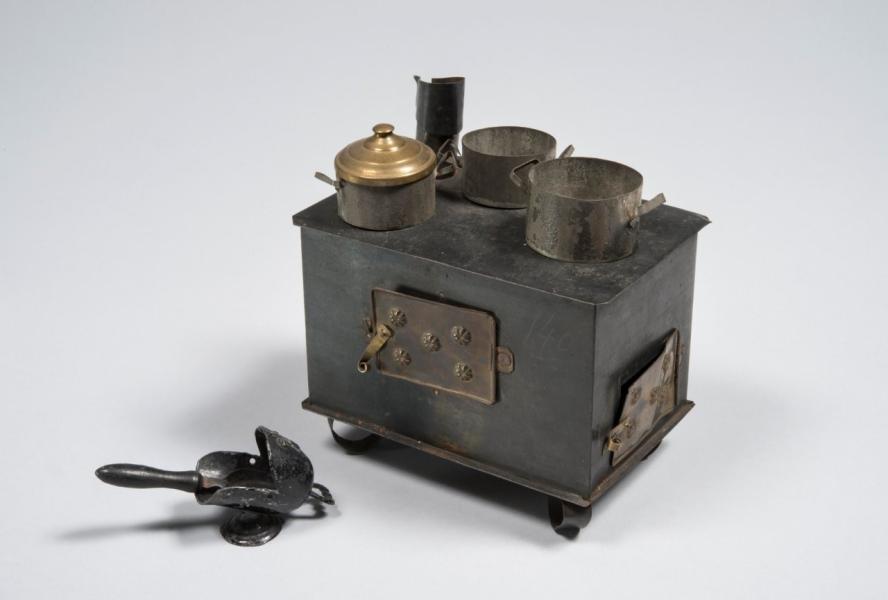
In the past, the kitchen was usually located at the back of the house or in a semi-basement. It was a service area where most household chores took place. Miniature kitchens and toy stoves allowed children to recreate these everyday activities as realistically as possible. Some miniature stoves could even be used to cook small meals, using a candle, methylated spirits or glowing embers!
The bathroom: the arrival of running water
The gradual introduction of running water and modern sewage systems transformed domestic life during the 19th century. The modern bathroom began to emerge, although it remained a luxury reserved for wealthy households for many years. Bathrooms were therefore still quite rare in 19th-century dollhouses. Dolls usually had to make do with a portable bathtub or a washstand in the bedroom.
The bedrooms: a room of one's own
During the 19th century, the bedroom increasingly became a private space. Children gradually took on a more important place within the family and were more often given their own bedrooms. Domestic servants also had their own sleeping quarters, usually tucked away in the attic. Dollhouses reflected this new organisation of domestic space, with separate bedrooms for parents, children and servants.
For children
The exhibition has been designed to appeal to visitors of all ages, with a playful and interactive setting. Children can explore the world of dollhouses through fun hands-on activities and a 3D animation.
After visiting the exhibition, families can head to the play attic at the Halle Gate, where children can continue their adventure. A giant dollhouse awaits them, along with a craft corner where they can let their creativity run free and a reading corner where they can relax with a book.
Activities to discover
Several events offer families the opportunity to extend their visit and enjoy the exhibition in different ways:
- 16 November 2017 – Opening night and a chance to meet the exhibition curator.
- 3 December 2017 – Saint Nicholas celebration at the Halle Gate.
- 28 January 2018 – Family Day: “Welcome to Little Life”.
- 13–16 February 2018 – Carnival holiday workshop for children aged 6 to 12: “Small is beautiful!”.
The workshop “House for Sale” is also available for groups, upon reservation.
Admission fees
- €7 – Standard admission
- €5 – Reduced admission
- €3 – Reduced admission
- Free – Children under 4 (exhibition + museum)
Visiting the exhibition
The exhibition is located on the third floor of the Halle Gate.
An accompanying publication is available in French and Dutch: La maison de poupée bruxelloise / Het Brussels poppenhuis, by Linda Wullus, published in 2017 by the Royal Museums of Art and History. This illustrated book tells the story of this remarkable miniature house and its creator.
Puppet Theatre Set, 1884-1890, inv. 2016.0103.001
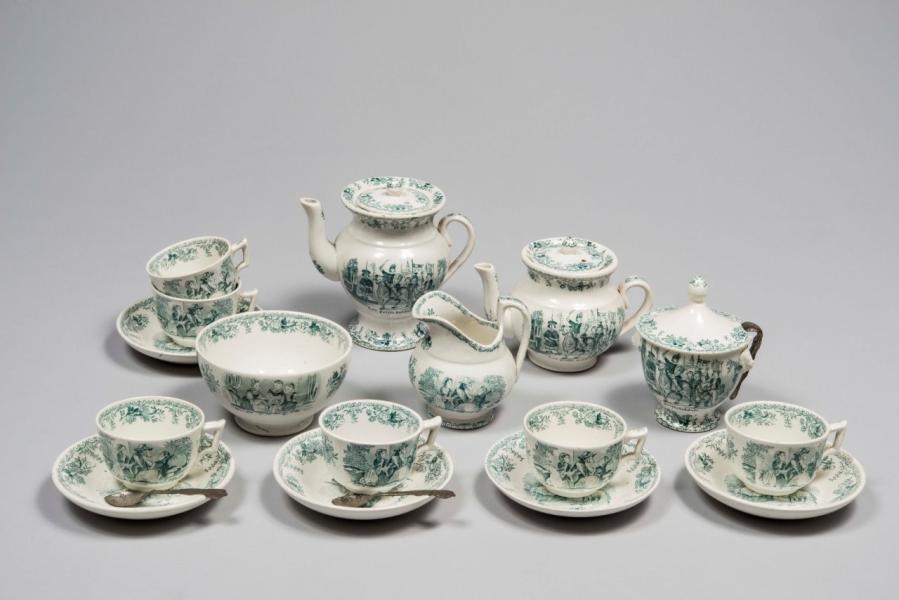
Children’s tea set, Jemappes, 1850–1870, inv. F.1781A-H
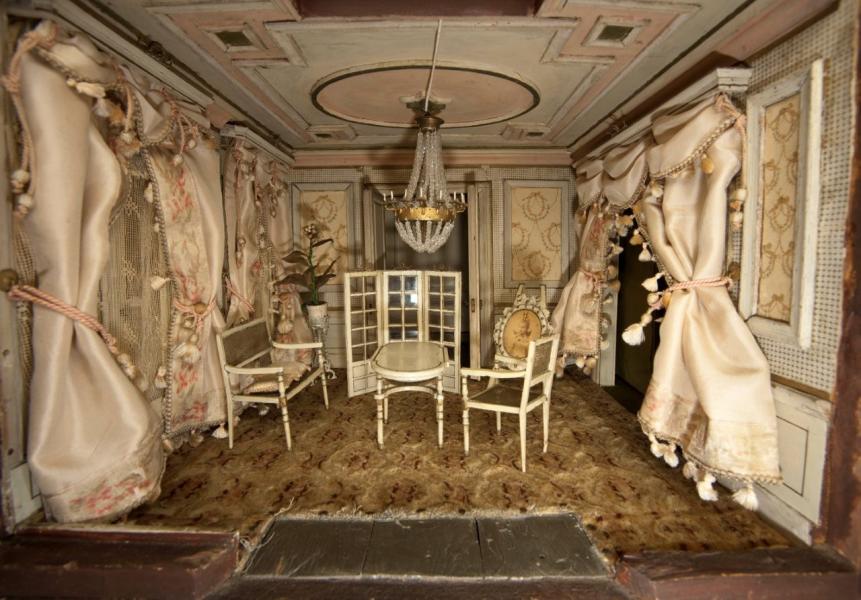
Sitting room in the Brussels dollhouse, Brussels, ca. 1900, inv. F.1850
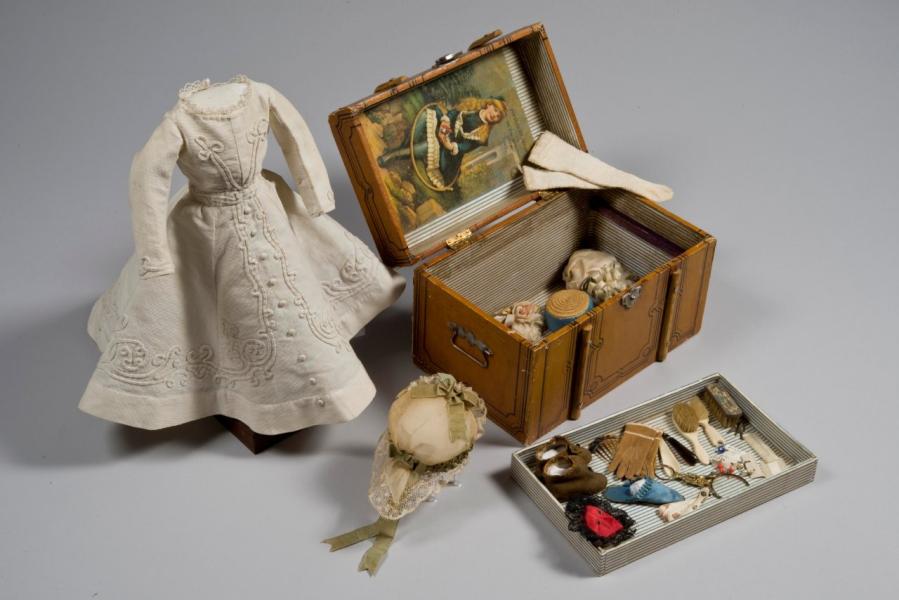
Doll’s dress and suitcase with accessories, Paris, 1850–1900, inv. F.1340 & F.7994
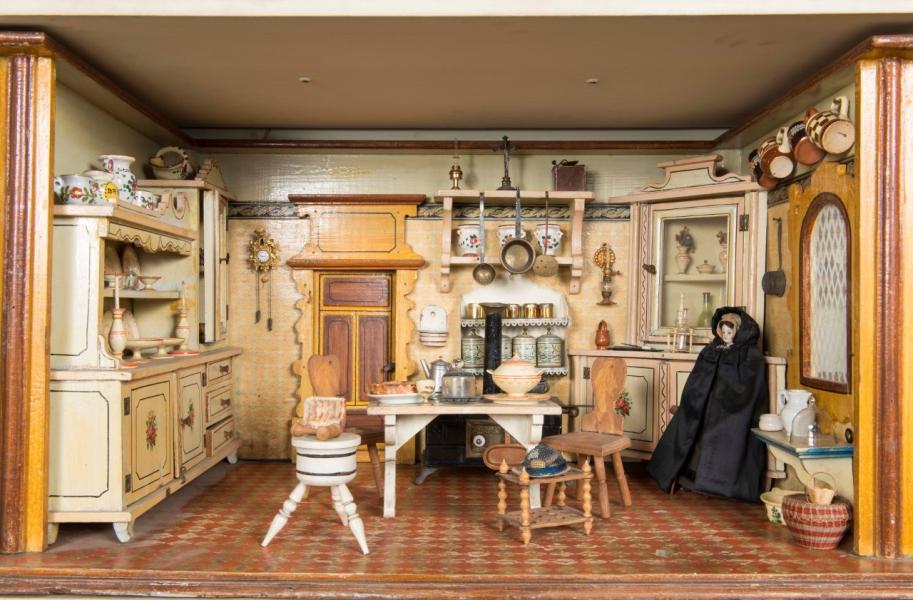
Kitchen in the “Appelboom” dollhouse, Germany, late 19th – early 20th century, inv. F.10402